If your e-commerce traffic dipped this year and you blamed “seasonality,” let’s be honest.
It probably wasn’t the season.
It was Google.
In 2025, Google’s algorithm updates aren’t gentle nudges anymore. They’re decisive course corrections. Sites that feel outdated, unhelpful, or overly optimized are being quietly pushed aside, while genuinely useful e-commerce brands are climbing sometimes without even trying to “game” SEO.
For store owners running on Shopify, this shift matters more than ever. Ranking today isn’t about tricks. It’s about trust, experience, and relevance at scale. That’s exactly why Shopify SEO Services India has become a serious search term for global brands looking for cost-effective, technically sound help.
Let’s break down what actually changed in 2025, why e-commerce businesses feel the impact harder than others, and what you should do now if rankings matter to your revenue.
What Changed In Google’s 2025 Algorithm Updates (Without The Jargon)
Google didn’t announce one giant update in 2025. It rolled out multiple layered changes, each reinforcing the same core idea.
Search results should feel human.
That means :
- Content written just to rank is losing visibility.
- Product pages without depth are fading.
- Stores that feel templated are being filtered out.
Google is now better at identifying whether a page genuinely helps a user decide, buy, compare, or trust a brand. If your store answers questions clearly, shows real expertise, and loads fast across regions, you’re ahead.
If not, even strong backlinks won’t save you forever.
Why E-Commerce Sites Are Hit Harder Than Blogs
Blogs can recover with content tweaks.
E-commerce sites are more complex.
You’re dealing with :
- Product pages.
- Collection pages.
- Filters and faceted URLs.
- Duplicate content risks.
- Page speed issues.
- Thin descriptions copied from suppliers.
Google’s 2025 updates look at how all of this works together. A great homepage can’t compensate for weak product pages anymore.
This is where Shopify stores often struggle. Shopify is powerful, but default setups are rarely optimized. Without intentional SEO work, stores slowly bleed rankings without obvious warnings.
That’s why many global brands are now outsourcing Shopify SEO Services India not for cheap labor, but for technical depth paired with scalability.
When Rankings Drop: The Signs Most Store Owners Miss
Not all ranking losses look dramatic.
Sometimes it’s just :
- Fewer impressions for “money” keywords.
- Product pages ranking but not converting.
- Traffic shifting toward low-intent queries.
- Collections losing visibility while blogs rise.
These are early signs that Google sees value gaps. The site isn’t bad. It’s just not convincing enough anymore.
In 2025, Google expects e-commerce sites to guide users, not just list products.
Why “Helpful Content” Is Now A Revenue Factor
Google’s Helpful Content system matured significantly in 2025. It now evaluates sites at a broader level, not page by page.
If your store feels like :
- A catalogue with prices.
- A copy-paste product dump.
- A brand without a voice.
Your entire domain can be dampened.
Helpful content, in an e-commerce context, means :
- Clear buying guidance.
- Real explanations of use cases.
- Transparent shipping, returns, and trust signals.
- Content that reduces hesitation.
This is where SEO now overlaps heavily with UX and conversion strategy.
A capable Digital Marketing Agency understands this. SEO is no longer isolated. It’s tied to how humans behave on your site.
Where Shopify Stores Need To Adapt Fastest In 2025
Most Shopify stores lose ground in the same areas.
- Product descriptions are too short.
- Collection pages lack intent targeting.
- Internal linking is random.
- Core Web Vitals are ignored.
Google doesn’t penalize Shopify itself. It penalizes lazy implementations.
Smart stores are now treating SEO as part of Website Development Company decisions, not an afterthought. Structure, speed, and scalability matter as much as keywords.
Buyer Intent Is The New Ranking Signal
Google’s AI models now detect intent more accurately than ever.
That means ranking for a keyword isn’t enough.
You must match what the user expects next.
For Example :
- A “best” query expects comparison and guidance.
- A product query expects depth and reassurance.
- A location-based query expects trust and clarity.
If your Shopify store ranks but doesn’t satisfy intent, it won’t stay there.
This is where expert-led Shopify SEO Services India are proving effective. Many Indian teams now work deeply with buyer psychology, not just keyword density.
The Role Of Custom Development In SEO Survival
Here’s an uncomfortable truth.
Off-the-shelf themes are holding many stores back.
In 2025, SEO performance is closely tied to :
- Theme efficiency.
- JavaScript handling.
- Server response times.
- Custom schema implementation.
Generic setups can’t always handle advanced SEO requirements. That’s why brands increasingly rely on Custom Web Development to align technical structure with search behavior.
SEO is no longer just content. It’s engineering.
Global SEO Needs Local Sensitivity
Even if your target market is global, Google evaluates regional relevance.
- Speed in Europe.
- UX in the US.
- Mobile behavior in Asia.
A site that ignores this feels disconnected. Businesses working with teams in Ahmedabad and similar hubs benefit from a global mindset paired with execution efficiency.
Companies like Apex Web Zone, based in Ahmedabad, often operate quietly in this space helping brands adapt without loud sales pitches or gimmicks.
Why 2025 Rewards Consistency Over Hacks
Shortcuts don’t compound anymore.
Publishing once and waiting won’t work.
Buying links without context won’t last.
Stuffing keywords breaks trust signals.
Google now rewards steady improvement. Small technical fixes. Better internal links. Stronger product narratives. Cleaner UX.
This favors brands that think long-term and partner with agencies that build systems, not tricks.
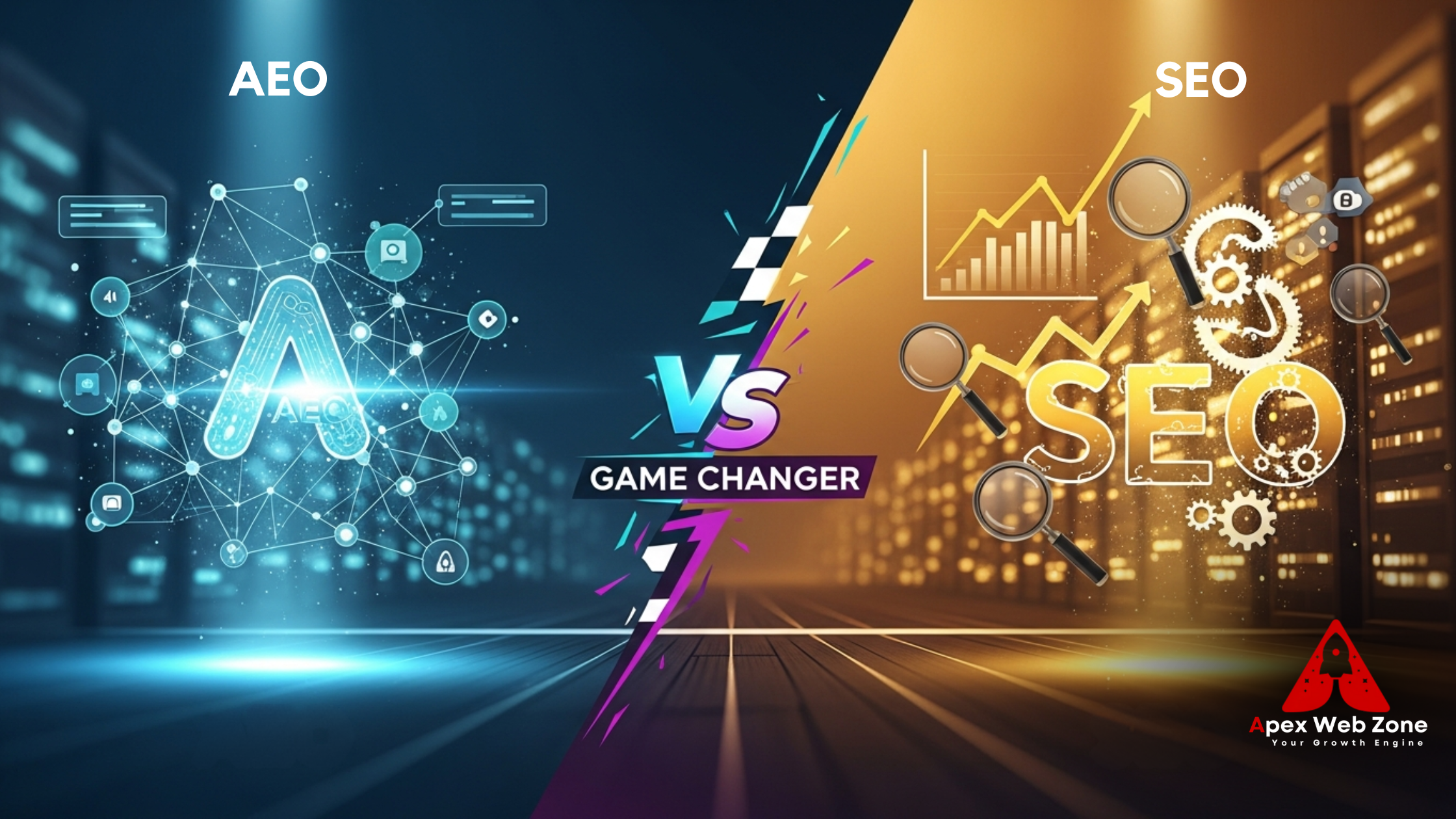
AEO: Why Answer Engines Matter Now
Search is no longer just ten blue links.
AI Overviews, snippets, and conversational results now pull from content that :
- Answers clearly.
- Uses natural language.
- Feels authoritative without hype.
Your Shopify store can appear in these answers if your content explains, not sells.
That’s where SEO meets education and why AEO is no longer optional.
Final Thoughts: Rankings Are Earned, Not Chased
Google’s 2025 updates didn’t kill SEO.
They killed shortcuts.
E-commerce brands that invest in clarity, experience, and real usefulness are thriving quietly. Those waiting for hacks are watching traffic slip month by month.
If your Shopify store matters to your business, SEO is no longer optional or isolated. It’s part of how your brand communicates trust.
Teams like Apex Web Zone in Ahmedabad operate in this space without noise, helping brands adapt rather than panic. Not by selling SEO dreams, but by aligning sites with how real users and Google now think.
And in 2025, that alignment is everything.
FAQ's
Yes. Shopify stores often face technical and content limitations that need intentional SEO customization to stay competitive.
Absolutely. Organic traffic remains one of the highest-ROI channels for e-commerce when done correctly.
Because they combine cost efficiency, technical expertise, and scalability for global markets.
SEO is continuous. Monthly audits and improvements are the new minimum standard.
Only if it understands development, UX, and content together. SEO in 2025 is cross-functional.