VEO: Why Your Website Is Invisible to Siri, Alexa and Google Assistant Right Now

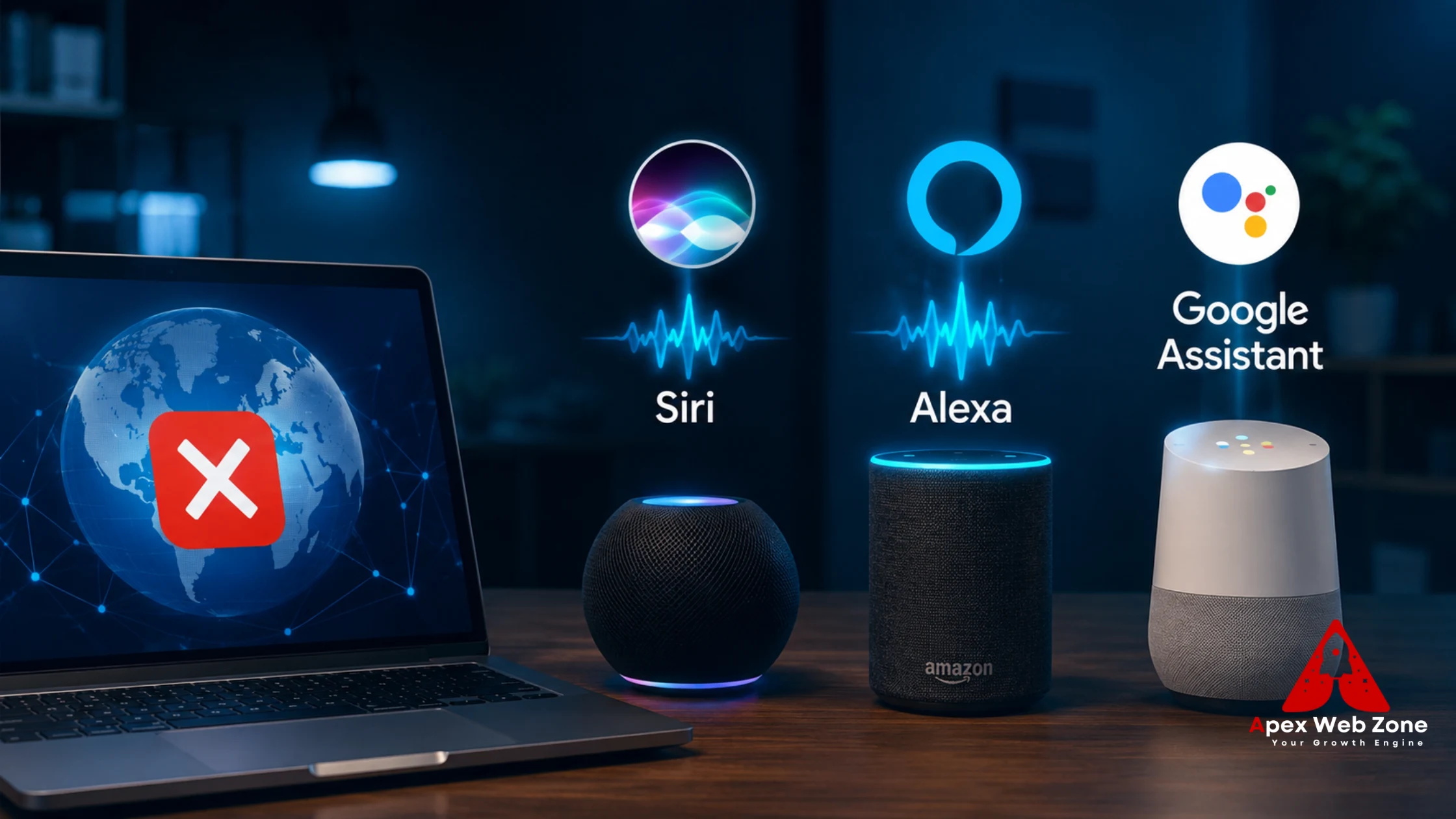
“Hey Siri, find a plumber near me.” “Alexa, what’s the best digital marketing agency in Ahmedabad?” “Ok Google, is this store open right now?” Questions like these get asked out loud millions of times a day, and every single one of them returns exactly one answer, sometimes two. Not a page of ten blue links. Not a scroll of options. One spoken result. If your website is not the one being read out loud, you are not in second place — you are invisible.

This is the reality of voice search, and it is why a newer discipline called VEO, or Voice Engine Optimization, has become just as important as traditional SEO. Most businesses have optimized their website for how people type. Very few have optimized it for how people talk. That gap is exactly where customers are slipping past you right now.

In this guide, we will break down why voice assistants ignore most websites, how VEO is different from traditional SEO, and the practical steps you can take to actually get read out loud.

Why Voice Search Is Different From Typed Search

When someone types a search, they are patient. They will scan a results page, compare a few options, and click around. Voice search removes all of that. People ask Siri, Alexa, or Google Assistant a question expecting a single spoken answer within seconds, usually while driving, cooking, or multitasking. There is no scrolling. There is no “page two.”

This changes what “ranking” even means. Voice assistants pull from featured snippets, structured data, and local business listings to generate that one spoken answer. If your content is not structured in a way the assistant can lift out cleanly, it gets skipped in favor of a competitor whose content is easier to extract — even if your website actually ranks higher in traditional search.

Voice queries are also phrased differently. Someone typing searches “best coffee shop Ahmedabad.” Someone speaking asks “what’s the best coffee shop near me that’s open right now?” Longer, more conversational, and packed with local and time-based intent. A website built around short, keyword-stuffed phrases is simply speaking a different language than the person asking.

Why Most Websites Are Invisible to Voice Assistants

No structured data for assistants to read

Voice assistants do not “read” a page the way a human does. They rely heavily on schema markup — Organization, LocalBusiness, FAQPage, HowTo — to understand exactly what a page is about and pull a precise answer from it. Without this markup, even well-written content is much harder for an assistant to confidently extract and speak aloud.

Content isn’t written as direct answers

Most web copy is written to sell, not to answer. Voice assistants favor content that opens with a direct, complete answer to a specific question, in one or two sentences, before going into detail. If a customer has to read three paragraphs to find your answer, an assistant will find a competitor who gave it in one line.

Missing or incomplete local listings

A large share of voice searches are local — “near me,” “open now,” “closest.” If your Google Business Profile, address, hours, and phone number are inconsistent across the web, assistants have no confident source to pull from and will default to a competitor with cleaner, consistent data.

Slow, unoptimized pages

Google’s AI Overviews and Assistant results lean toward fast, mobile-friendly pages. A slow-loading site is less likely to be indexed as a snippet source in the first place, which removes it from the pool of pages voice assistants can even choose from.

No FAQ-style content

Voice queries are naturally phrased as questions. Websites without a dedicated FAQ section, or without content structured around real questions customers ask, are handing assistants nothing conversational to extract and speak back.

How to Actually Get Found by Siri, Alexa, and Google Assistant

  1. Write for the spoken question, not the typed keyword

Rework key pages to directly answer full, conversational questions. Instead of a heading like “SEO Services,” try structuring a section around “What does an SEO agency actually do?” followed by a clear, one-to-two sentence answer before expanding further.

  1. Add FAQ and HowTo schema to key pages

Structured data is the single highest-leverage fix for voice visibility. It tells assistants exactly which sentence answers which question, with no guessing involved. This is a core part of the technical work behind our SEO services, and one of the fastest wins available for most websites.

  1. Lock down your local listings

Make sure your business name, address, phone number, and hours are identical across your website, Google Business Profile, and every directory you appear in. Even small inconsistencies — a missing suite number, an old phone line — can be enough for an assistant to skip you in favor of a cleaner listing.

  1. Target long-tail, conversational keywords
  • Focus on full-sentence phrases people actually say out loud, not short fragments
  • Include question-based headings: what, how, why, where, is it, does it
  • Add location and time context where relevant — “near me,” “open now,” “this weekend”
  • Keep the direct answer near the top of the section, details below it
  1. Improve page speed and mobile experience

Voice results heavily favor pages that load fast and render cleanly on mobile, since most voice queries originate from phones and smart speakers connected to mobile-first indexes. A slower site is quietly excluded from the pool before content quality is even considered.

VEO Is the Next Layer, Not a Replacement

Voice Engine Optimization is not a separate strategy from SEO — it is what happens when your existing SEO foundation is structured well enough for a machine to speak it out loud. It sits alongside newer concepts like GEO and AXO, which we cover in more detail in SEO vs GEO vs AEO vs AXO: Which Moves the Needle, as part of the same shift toward AI-driven discovery.

The businesses winning voice search right now are not necessarily the ones with the most content. They are the ones whose content is easiest for an assistant to confidently lift, structure, and speak back to a customer in three seconds or less.

The Bottom Line

Every day that your website isn’t structured for voice, you are losing customers to a competitor who never even outranked you — they were just easier for Siri, Alexa, or Google Assistant to read out loud. The fix is not a full rebuild. It starts with structured data, conversational content, and clean local listings.

Not sure where your site currently stands? Start with a free SEO audit to see exactly what’s missing, or get in touch with Apex Web Zone and we’ll walk you through a voice-readiness check for your website.

VEO is the practice of structuring a website so voice assistants like Siri, Alexa, and Google Assistant can confidently extract and read your content aloud as a direct answer. It builds on traditional SEO but focuses on conversational content, structured data, and local listing accuracy.

Most websites are written for readers who scan and click, not for a single spoken answer. Without FAQ or HowTo schema, direct-answer content, and consistent local listings, voice assistants have nothing clean to extract and will default to a competitor whose content is easier to lift.

It builds on the same foundation but with a different focus. Traditional SEO targets ranking positions on a results page, while VEO focuses on being the single answer an assistant chooses to speak aloud, which depends heavily on structured data and conversational phrasing.

Yes, significantly. A large share of voice queries are local, such as “near me” or “open now.” An accurate, consistent Google Business Profile with correct hours, address, and phone number is one of the most important signals assistants use to select a local answer.

Structural changes like schema markup and local listing corrections can influence voice visibility within weeks, though results vary by industry and competition. Treat it as an ongoing part of your SEO strategy rather than a one-time fix, since assistants continually reassess which sources are easiest to extract from.

What AI Models Actually Say About Your Business When a Buyer Asks And How to Control It


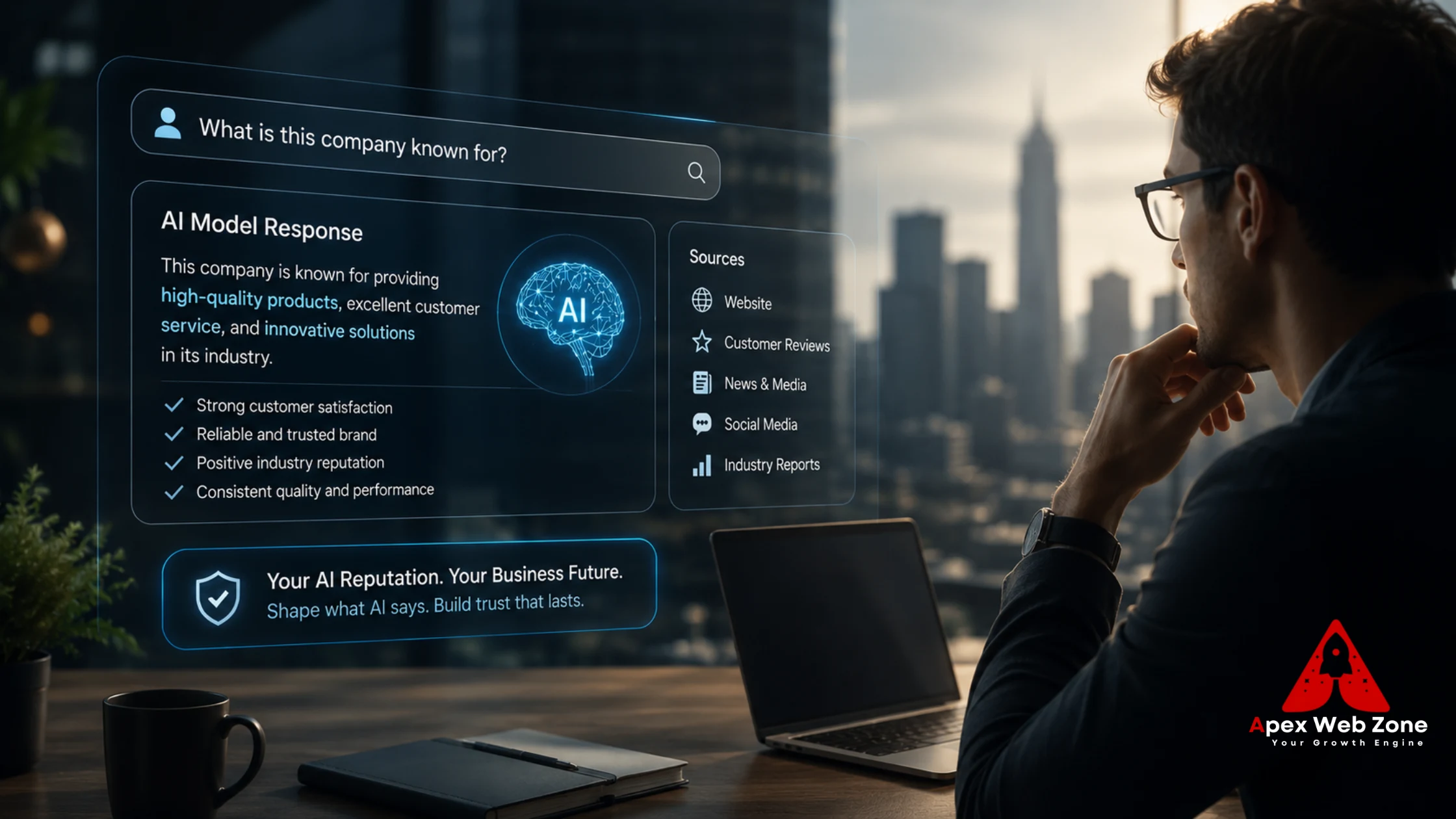
A potential customer no longer starts their research with a Google search alone. Increasingly, they open ChatGPT, Perplexity, or Gemini and simply ask: “Is [your company] any good?” or “What do people say about [your brand]?” Whatever the model answers in that moment can make or break a deal before your sales team ever gets a chance to speak to the buyer.

This is the reality of AXO — AI Experience Optimization, sometimes called AI Answer Optimization. It’s the practice of understanding, monitoring, and shaping how large language models describe your business, because those answers are quietly becoming as important as your Google ranking, if not more so.

Why AI Answers Matter as Much as Search Rankings

For the past two decades, brand reputation management focused on controlling what appeared on page one of Google: reviews, news coverage, social proof, and your own website. That work still matters, but a new layer has been added on top of it. AI models don’t just show links — they synthesize an opinion. When a buyer asks an AI model about your business, they get a summarized, conversational answer that blends your website copy, review sites, news articles, forum threads, and comparison content into a single narrative.

The problem is that this narrative is often built from outdated, incomplete, or even incorrect information, and most business owners have no idea what that narrative currently says. Unlike a search results page, there’s no simple way to “check your ranking” for an AI answer — you have to actively query the models yourself to find out.

What Determines What AI Says About Your Business

Language models don’t have a live, verified profile of your company. They form impressions based on the volume, consistency, and credibility of information available across the web. Several sources tend to carry the most weight:

  • Your own website content, especially the About page, service pages, and any structured data (schema markup) that clearly defines who you are and what you do.
  • Review platforms such as Google Business Profile, Trustpilot, Clutch, and industry-specific directories.
  • News mentions, press releases, and third-party articles that reference your company by name.
  • Comparison and “best of” articles where your brand is discussed alongside competitors.
  • Forums, Q&A sites like Quora and Reddit, and community discussions where your brand is mentioned organically.
  • Wikipedia and other reference sites, when applicable, which models tend to treat as high-authority sources.

Because AI models pull from this wide mix of sources, a single outdated review, an unresolved complaint thread, or a competitor’s biased comparison article can end up shaping the answer a buyer receives, even if it no longer reflects your business today.

How to Find Out What AI Models Are Saying About You

The first step in AXO is simply auditing your current AI narrative. This means running a consistent set of prompts across the major models your buyers are likely to use, and documenting the answers.

  • Ask direct brand questions: “What is [company name]?” and “What does [company name] do?”
  • Ask reputation questions: “Is [company name] a good company to work with?” and “What do customers say about [company name]?”
  • Ask comparison questions: “How does [company name] compare to [competitor]?”
  • Ask buyer-intent questions: “Should I hire [company name] for ?”

Run these prompts across ChatGPT, Gemini, Perplexity, and Copilot at minimum, since each model draws on different training data and live retrieval sources, and their answers can vary significantly. Keep a simple log so you can track how the narrative shifts over time as you make changes.

How to Influence and Control the AI Narrative

Once you know what the models are currently saying, you can start shaping the inputs that feed those answers. This isn’t about tricking an AI model — it’s about making sure accurate, current, and favorable information about your business is the most visible and most consistent information available for it to learn from.

  1. Strengthen your own first-party content

Make sure your website clearly and explicitly states what your company does, who it serves, and what makes it different, in plain language a model can easily extract. Vague marketing copy gives AI models less to work with than direct, factual statements.

  1. Use structured data and schema markup

Organization schema, review schema, and FAQ schema give models machine-readable signals about your business identity, offerings, and reputation, which reduces the chance of misinterpretation.

  1. Actively manage reviews across platforms

Respond to negative reviews professionally and encourage satisfied customers to leave detailed, specific feedback. Models weigh the tone and consistency of review content, not just the star rating.

  1. Get featured in credible third-party content

Earned mentions in industry publications, comparison articles, and roundups carry more weight than self-published claims. Digital PR and guest content remain some of the most effective ways to influence how models perceive your credibility.

  1. Correct outdated or inaccurate information at the source

If an old article, directory listing, or forum post contains incorrect details about your business, reach out to have it updated or add a follow-up comment with the correct information. Models can’t always tell the difference between current and stale content unless the correction exists somewhere for them to find.

  1. Monitor consistently, not just once

AI models update their retrieval sources and training data on an ongoing basis. A narrative that looks accurate today can drift within a few months. Treat AXO monitoring as a recurring task, similar to rank tracking in traditional SEO.

Where AXO Meets Online Reputation Management

AXO and traditional online reputation management (ORM) are converging into a single discipline. ORM has always been about ensuring the internet reflects your business fairly and accurately; AXO extends that responsibility into the layer where AI models summarize that same information for buyers who never click a single link. A business that manages both together — clean, consistent, and accurate signals across the web, paired with active monitoring of AI outputs — is far better positioned to win the buyer’s trust in the moment that actually matters: the moment they ask an AI model whether your business is worth working with.

The Bottom Line

Buyers are outsourcing part of their research and trust-building process to AI models, and those models are forming and repeating an opinion about your business whether you’re paying attention or not. The businesses that get ahead of this now — by auditing their AI narrative, strengthening first-party signals, and treating AXO as an ongoing discipline — will be the ones showing up as the trusted answer instead of the flawed alternative when the next buyer asks.

Traditional SEO focuses on ranking web pages in search engine results so a person clicks through to your site. AXO focuses on how AI models summarize and describe your business directly inside a conversational answer, often without any click at all. The two disciplines share many underlying tactics, such as strong content and credible mentions, but AXO specifically targets how models interpret and repeat information about your brand.

You can’t edit a model’s output directly, but you can influence it by changing the underlying information the model draws from — your website, reviews, press coverage, and structured data. Because models are retrained and refreshed over time, and several also pull live web results, improvements to your public information footprint do eventually show up in how the model responds.

 Yes, and often more easily than in traditional SEO. AI trust is built on clarity and consistency, not domain age or marketing budget. A small business with clean schema and accurate, consistent listings can be recommended ahead of a much larger competitor whose information is scattered or outdated.

No it extends it. ORM work such as review management, PR, and correcting inaccurate listings directly feeds into a stronger AI narrative, so the two efforts reinforce each other rather than competing for budget or attention.

No. AIO sits on top of strong SEO fundamentals. You still need a fast, crawlable, well-structured website. AIO adds the trust and clarity layer that helps AI systems confidently recommend that website once it is found.