VEO: Why Your Website Is Invisible to Siri, Alexa and Google Assistant Right Now
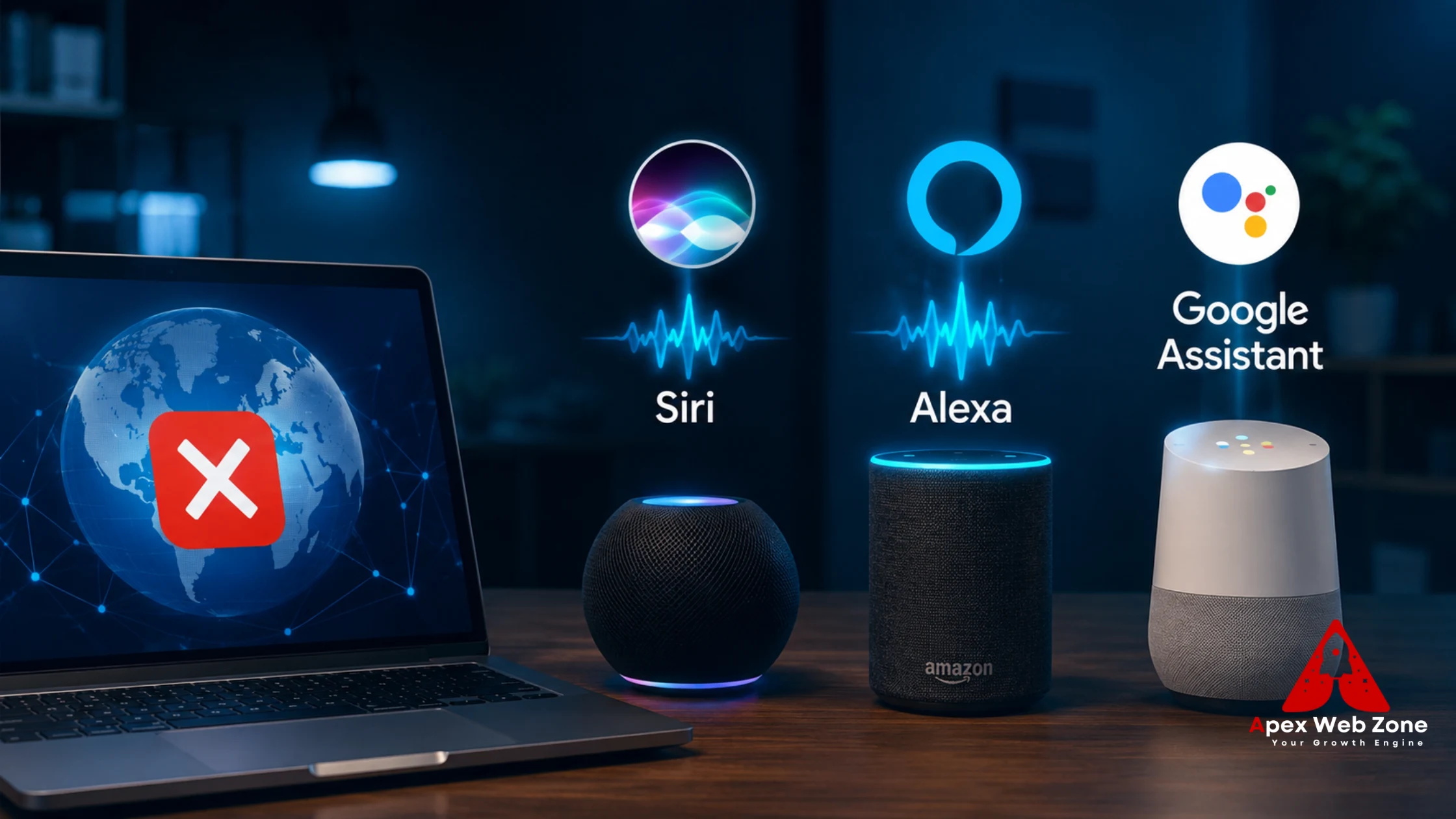
“Hey Siri, find a plumber near me.” “Alexa, what’s the best digital marketing agency in Ahmedabad?” “Ok Google, is this store open right now?” Questions like these get asked out loud millions of times a day, and every single one of them returns exactly one answer, sometimes two. Not a page of ten blue links. Not a scroll of options. One spoken result. If your website is not the one being read out loud, you are not in second place — you are invisible.
This is the reality of voice search, and it is why a newer discipline called VEO, or Voice Engine Optimization, has become just as important as traditional SEO. Most businesses have optimized their website for how people type. Very few have optimized it for how people talk. That gap is exactly where customers are slipping past you right now.
In this guide, we will break down why voice assistants ignore most websites, how VEO is different from traditional SEO, and the practical steps you can take to actually get read out loud.
Why Voice Search Is Different From Typed Search
When someone types a search, they are patient. They will scan a results page, compare a few options, and click around. Voice search removes all of that. People ask Siri, Alexa, or Google Assistant a question expecting a single spoken answer within seconds, usually while driving, cooking, or multitasking. There is no scrolling. There is no “page two.”
This changes what “ranking” even means. Voice assistants pull from featured snippets, structured data, and local business listings to generate that one spoken answer. If your content is not structured in a way the assistant can lift out cleanly, it gets skipped in favor of a competitor whose content is easier to extract — even if your website actually ranks higher in traditional search.
Voice queries are also phrased differently. Someone typing searches “best coffee shop Ahmedabad.” Someone speaking asks “what’s the best coffee shop near me that’s open right now?” Longer, more conversational, and packed with local and time-based intent. A website built around short, keyword-stuffed phrases is simply speaking a different language than the person asking.
Why Most Websites Are Invisible to Voice Assistants
No structured data for assistants to read
Voice assistants do not “read” a page the way a human does. They rely heavily on schema markup — Organization, LocalBusiness, FAQPage, HowTo — to understand exactly what a page is about and pull a precise answer from it. Without this markup, even well-written content is much harder for an assistant to confidently extract and speak aloud.
Content isn’t written as direct answers
Most web copy is written to sell, not to answer. Voice assistants favor content that opens with a direct, complete answer to a specific question, in one or two sentences, before going into detail. If a customer has to read three paragraphs to find your answer, an assistant will find a competitor who gave it in one line.
Missing or incomplete local listings
A large share of voice searches are local — “near me,” “open now,” “closest.” If your Google Business Profile, address, hours, and phone number are inconsistent across the web, assistants have no confident source to pull from and will default to a competitor with cleaner, consistent data.
Slow, unoptimized pages
Google’s AI Overviews and Assistant results lean toward fast, mobile-friendly pages. A slow-loading site is less likely to be indexed as a snippet source in the first place, which removes it from the pool of pages voice assistants can even choose from.
No FAQ-style content
Voice queries are naturally phrased as questions. Websites without a dedicated FAQ section, or without content structured around real questions customers ask, are handing assistants nothing conversational to extract and speak back.
How to Actually Get Found by Siri, Alexa, and Google Assistant
- Write for the spoken question, not the typed keyword
Rework key pages to directly answer full, conversational questions. Instead of a heading like “SEO Services,” try structuring a section around “What does an SEO agency actually do?” followed by a clear, one-to-two sentence answer before expanding further.
- Add FAQ and HowTo schema to key pages
Structured data is the single highest-leverage fix for voice visibility. It tells assistants exactly which sentence answers which question, with no guessing involved. This is a core part of the technical work behind our SEO services, and one of the fastest wins available for most websites.
- Lock down your local listings
Make sure your business name, address, phone number, and hours are identical across your website, Google Business Profile, and every directory you appear in. Even small inconsistencies — a missing suite number, an old phone line — can be enough for an assistant to skip you in favor of a cleaner listing.
- Target long-tail, conversational keywords
- Focus on full-sentence phrases people actually say out loud, not short fragments
- Include question-based headings: what, how, why, where, is it, does it
- Add location and time context where relevant — “near me,” “open now,” “this weekend”
- Keep the direct answer near the top of the section, details below it
- Improve page speed and mobile experience
Voice results heavily favor pages that load fast and render cleanly on mobile, since most voice queries originate from phones and smart speakers connected to mobile-first indexes. A slower site is quietly excluded from the pool before content quality is even considered.
VEO Is the Next Layer, Not a Replacement
Voice Engine Optimization is not a separate strategy from SEO — it is what happens when your existing SEO foundation is structured well enough for a machine to speak it out loud. It sits alongside newer concepts like GEO and AXO, which we cover in more detail in SEO vs GEO vs AEO vs AXO: Which Moves the Needle, as part of the same shift toward AI-driven discovery.
The businesses winning voice search right now are not necessarily the ones with the most content. They are the ones whose content is easiest for an assistant to confidently lift, structure, and speak back to a customer in three seconds or less.
The Bottom Line
Every day that your website isn’t structured for voice, you are losing customers to a competitor who never even outranked you — they were just easier for Siri, Alexa, or Google Assistant to read out loud. The fix is not a full rebuild. It starts with structured data, conversational content, and clean local listings.
Not sure where your site currently stands? Start with a free SEO audit to see exactly what’s missing, or get in touch with Apex Web Zone and we’ll walk you through a voice-readiness check for your website.
VEO is the practice of structuring a website so voice assistants like Siri, Alexa, and Google Assistant can confidently extract and read your content aloud as a direct answer. It builds on traditional SEO but focuses on conversational content, structured data, and local listing accuracy.
Most websites are written for readers who scan and click, not for a single spoken answer. Without FAQ or HowTo schema, direct-answer content, and consistent local listings, voice assistants have nothing clean to extract and will default to a competitor whose content is easier to lift.
It builds on the same foundation but with a different focus. Traditional SEO targets ranking positions on a results page, while VEO focuses on being the single answer an assistant chooses to speak aloud, which depends heavily on structured data and conversational phrasing.
Yes, significantly. A large share of voice queries are local, such as “near me” or “open now.” An accurate, consistent Google Business Profile with correct hours, address, and phone number is one of the most important signals assistants use to select a local answer.
Structural changes like schema markup and local listing corrections can influence voice visibility within weeks, though results vary by industry and competition. Treat it as an ongoing part of your SEO strategy rather than a one-time fix, since assistants continually reassess which sources are easiest to extract from.