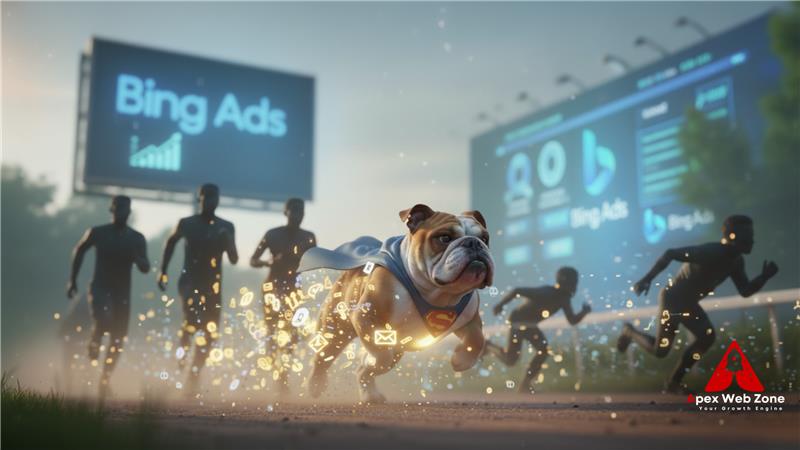
Bing Ads Specialist optimizing campaigns for high-ROI advertising

Most businesses spend their entire advertising budget chasing clicks on Google, Instagram, or Amazon. It’s almost a default setting at this point. But while the world is busy fighting for overpriced keywords and drowning in competition, there’s a quieter corner of the internet where conversions arrive without drama Bing Ads.

Yes, the “Underdog Platform.

Yes, the one everyone ignores until they check their analytics and wonder,

Why Are These Leads So Profitable?

Smart marketers, especially those working with a skilled Bing Ads Specialist, already know the secret: the platform may not shout the loudest, but it quietly delivers some of the cleanest ROI in the paid ads ecosystem.

This article breaks down why Bing Ads is printing profits while others burn cash, who should use it, when it outperforms its competitors, and how real brands are leveraging it.

Written from the lens of users and agencies who’ve worked firsthand with Bing’s unique (and bizarrely underrated) traffic engine.

Why Bing Ads Still Works In 2025 (Even Better Than Expected)

Let’s Address The Obvious :

Google dominates search. No debate there. But domination also comes with saturated CPCs, messy competition, and ad fatigue.

Bing, on the other hand, benefits from three huge market realities :

1. The Windows Universe

Every Windows device millions of laptops worldwide defaults to Bing + Edge.

And despite what digital purists believe, a huge number of users never bother changing the default search engine.

This is especially true for corporate environments, banking systems, hospitals, and education institutions. These users search with intent. They usually have higher income levels. And they convert at a surprisingly high rate.

2. The LinkedIn Advantage

Microsoft owns LinkedIn, and that means one thing :

Better Audience Matching For Professional And B2B Targeting.

Most PPC advertisers who try Bing Ads are stunned by how tightly they can target decision-makers, job roles, and industries compared to Google.

It’s a goldmine for :

  • SaaS Companies.
  • Consulting Firms.
  • Industrial Suppliers.
  • High-Ticket B2B Services.
  • Professional Training Companies.

3. Lower CPCs And Less Drama

When competition is low, CPC is low.

And when CPC is low, ROAS shoots up.

This is the core reason Bing Ads has quietly remained a profit-printing machine for businesses across the globe.

Where Bing Ads Wins (Real Examples + Use Cases)

To understand how and where Bing shines, let’s explore real-world scenarios. 

1. Mid-Sized Businesses Looking For Stable Lead Flow

A mid-sized accounting firm in the US recently switched 20% of their PPC budget from Google to Bing.

Result?

Their cost per lead dropped from $42 to $19 in 60 days. Same ad copy. Same keywords. Better conversions.

Why?

Corporate users browsing on work computers + fewer advertisers bidding for the same niche.

2. Amazon Sellers Using Amazon Ads Management

Here’s one most people overlook :

A lot of Amazon shoppers, especially in the US, browse from desktops. And guess what desktops love using? Bing.

Running Bing Ads to redirect users to Amazon listings especially via branded search ads leads to high-intent clicks that convert.

This is why several sellers who use Amazon Ads Management also quietly run small Bing campaigns for branded, competitor, and long-tail keywords.

3. Emerging Agencies Offering PPC Management Services

Agencies that want to impress clients with fast results often run Bing Ads parallel to Google.

Clients love seeing improved ROI, and agencies love the lower acquisition costs.

It’s a smart move for agencies offering :

  • PPC Management Services.
  • Instagram Advertising Services.
  • Digital Marketing Agency packages.
  • Amazon Paid Advertising.

Bing doesn’t replace these platforms it enhances them.

4. High-Ticket Services Targeting Professionals

When you target :

  • Lawyers.
  • Doctors.
  • Executives.
  • Consultants.
  • Corporate Buyers.

Bing often delivers cleaner leads because of the LinkedIn-powered targeting ecosystem.

When Should Businesses Use Bing Ads? (The Honest Breakdown)

Bing Ads isn’t for every business, and pretending otherwise would be sloppy marketing.

Here’s the practical, straight-up guide :

Use Bing Ads When :

  • You want conversions without burning money.
  • Your audience includes professionals or corporate users.
  • You run B2B or high-ticket services.
  • You’re doing well on Google and want a cheap expansion.
  • You’re an Amazon seller targeting desktop shoppers.
  • You’re tired of Google Ads auctions that feel like UFC fights.

Avoid Bing Ads When :

  • Your audience is primarily teenagers or Gen Z.
  • Your niche relies heavily on TikTok/Instagram culture.
  • You’re selling impulse-purchase fast fashion (unless your demographic skews older).

Bing is fantastic but it’s not a one-size-fits-all magic trick.

The Secret Weapon: A Skilled Bing Ads Specialist

You can run Bing Ads yourself.

It’s not rocket science.

But squeezing real profit out of it that’s where expertise shows.

A Bing Ads Specialist knows :

  • How To Structure Campaigns ForLower CPC.
  • Which Keywords Work Best On Microsoft’s Network.
  • How To Leverage LinkedIn-Driven Demographic Targeting.
  • How To Avoid Wasted Spend On Mobile And Low-Quality Traffic.
  • How To Create Ad Variations That Fit Bing’s User Psychology.

Most Bing users behave slightly differently from Google users.

They don’t rush. They read. They compare.

A specialist tailors ads to that mindset.

This is why businesses working with experienced teams (including agencies like Apex Web Zone, based in Ahmedabad but serving clients globally) tend to outperform DIY advertisers dramatically. The goal isn’t to throw money at Bing it’s to engineer campaigns that stay profitable for months without daily firefighting.

How Bing Ads Fit Into A Multi-Channel Advertising Strategy

Let’s talk practical strategy the stuff that actually makes money.

Instead of treating Bing Ads as a replacement for Google or social ads, think of it as a quiet side-channel that does the heavy lifting while other platforms handle scale.

The smartest brands usually do this :

  • Use Google for high-volume intent.
  • Use Bing for low-cost conversions
  • Use Instagram Advertising Services for awareness.
  • Use Amazon Paid Advertising for marketplace dominance.
  • Use content + SEO for organic brand building
  • Use remarketing across all platforms.

This creates a circular ecosystem where paid traffic reinforces organic traction and vice versa.

Bing Ads often ends up being the “Profit Stabilizer” the channel that balances ROAS when Google gets too competitive.

What Makes Bing Ads Profitable? (The Psychology Behind the Clicks)

This is the part most advertisers underestimate.

Bing Users :

  • Tend To Be Older.
  • Tend To Have Higher Income.
  • Make More Deliberate Decisions.
  • Browse From Desktops.
  • Often Search During Work Hours.
  • That Means Fewer Impulse Clicks And More Considered Purchases.

For businesses, this translates into :

  • Higher Order Values.
  • Lower Refunds.
  • Better Lead Quality.
  • Longer Customer Lifetime Value.

When you combine this with smart PPC structure, Bing Ads becomes a long-term profit machine instead of a short-term experiment.

Conclusion: The Smart Money Is Quiet And It’s On Bing

While flashy marketers argue over Google vs Meta, the real strategists quietly tap into Bing Ads and watch the steady stream of conversions roll in. It’s the platform that doesn’t brag, doesn’t shout, and doesn’t play the expensive auction games everyone else is stuck in.

For businesses aiming for sustainable growth, Bing Ads is less of an alternative and more of an advantage especially when set up by someone who knows how to unlock its hidden potential.

If your brand wants smarter advertising, cleaner ROI, and a channel that delivers without chaos, Bing Ads deserves a seat at your strategy table. And if you ever need help navigating the landscape, teams like Apex Web Zone are always around to guide you quietly, effectively, and with the same understated power that makes Bing Ads so profitable.

FAQ's

Q1. Is Bing Ads worth using in 2025?

Yes. Bing Ads remains one of the most cost-efficient PPC platforms due to lower competition, higher-quality desktop traffic, and LinkedIn-powered targeting.

Q2. Who benefits most from Bing Ads?

B2B companies, Amazon sellers, service-based businesses, and brands targeting professionals or high-income demographics.

Q3. Is Bing better than Google Ads?

Not better but more profitable in certain cases. Bing offers lower CPCs and stronger professional targeting, while Google offers higher volume.

Q4. Do I need a Bing Ads Specialist?

A specialist helps optimize bids, audiences, and ad structure, ensuring you get maximum ROI without wasted spend.

Q5. Can Bing Ads work globally?

Absolutely. Its reach spans the US, UK, Europe, Australia, India, and most APAC regions.
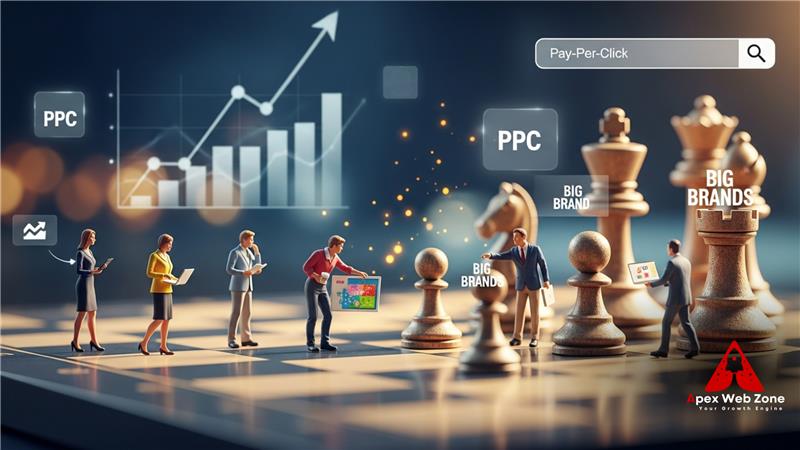
Small business outperforming big brands through smarter PPC strategy

There’s a major shift happening in digital advertising. Smarter PPC for Small Businesses is becoming a real advantage, allowing small brands to compete with and often outperform  big-budget giants. PPC is no longer a money game; it’s a strategy game, and small businesses are finally winning.

Yet, when it comes to PPC the quiet battlefield of clicks, intent, and data small businesses are pulling off something unexpected. They’re competing. And in many cases, they’re winning.

Running PPC campaigns used to feel like a money game. Whoever spent the most usually controlled the top spot. But things changed. Ad platforms evolved. Consumer behaviour shifted. Data became more powerful than budget alone. And that’s where the tables turned.

As someone who has worked with many businesses through Apex Web Zone (a digital team based in Ahmedabad serving clients worldwide), I’ve seen this story unfold repeatedly. A small brand with limited resources comes in, tired of losing to the Goliaths in their industry. They’re hungry to grow. They’re open to smarter strategies. And that’s enough to tilt the entire equation.

Let’s break down how small businesses are outsmarting big brands with smarter PPC and how you can join that winning side.

The New Reality: Agility Beats Deep Pockets

Big brands are famous for slow decisions. They have layers of approval, teams of strategists, long meetings, and fixed global processes. A simple change in ad copy can take days.

Small businesses move differently. They adjust daily. Sometimes hourly. They pivot fast because they have to survive. When trends shift, they react immediately. If something stops working, they change direction.

PPC rewards that kind of agility.

Platforms like Google Ads, Bing Ads, Amazon Ads, and Instagram thrive on fast learning loops. When a business tests often, data piles up faster. When decisions move quicker, results improve sooner. That’s why a small business with the right PPC Management Services partner can outperform brands ten times bigger.

Agility is a bigger asset than budget. And small businesses own it.

Use Case #1: Winning With Precision Targeting

A boutique skincare brand we worked with wanted to compete with huge global names. Their budget? Less than 6% of what big brands were spending each month.

Instead of spreading ads across vague audiences, we narrowed it down using intent-based segments. People searching for very specific needs. People looking for certain ingredients. People frustrated with expensive products that don’t work.

This hyper-focused targeting cut the competition and built relevance.

Big brands cast wide nets. Small brands shoot with accuracy.

That one change dropped their cost per click by 37% and increased conversions nearly fourfold. That’s the power of precision. And that’s the advantage a smaller, smarter team has.

Why Smarter PPC Wins Over Bigger PPC

To understand why small businesses are succeeding, just look at how platforms work today. They reward three things :

1. Relevance.

2. Speed Of Learning.

3. High-Quality User Signals.

And none of these require large budgets.

Let’s break them down.

  • Relevance Drives Everything

Google, Instagram, and Amazon don’t care about your ad budget. They want users to see helpful, high-quality ads. When your campaign is relevant, platforms give you better placement and lower CPC.

Small businesses are better at relevance because they know their customers personally. They understand pain points, behaviour, and emotions deeply.

  • Speed Of Learning

Small brands experiment fast. Test quickly. Adapt daily. Every small shift a headline tweak, a new keyword, a fresh visual helps the algorithm learn.

Big brands wait for approval, meetings, and layers of bureaucracy.

  • User Signals Beat Money

A relevant ad clicked by the right user will always outperform an expensive ad shown to the wrong person.

This is why smarter beats bigger.

How Different PPC Channels Help Small Businesses Win

Big brands go heavy on Google. Small businesses spread budgets across channels where competition is lower and intent is higher. This is exactly where services like Amazon Ads Management, Instagram Advertising Services, and Bing Ads Specialist expertise shine.

Here’s a quick comparison of how platforms support small brands :

PlatformWhy Small Businesses Gain AdvantageIdeal For
Google AdsIntent-driven, fast testing, low waste with proper setup.Global reach, service businesses
Instagram AdsVisual storytelling, niche communities, strong engagementLifestyle, fashion, wellness, consumer brands
Bing AdsLower competition, cheaper CPC, higher-quality usersB2B, tech, local service providers
Amazon AdsBuyers with high purchase intent, product-focused visibilityeCommerce, DTC brands
Amazon Paid AdvertisingOutranks bigger sellers if optimized wellNiche product categories

When you combine multiple platforms with the right strategy, you create a PPC engine that big brands struggle to match.

Use Case #2: Beating Big Brands On Amazon Ads

One of our clients sold handmade kitchen products. They were competing against massive sellers on Amazon.

But bigger sellers weren’t running precise long-tail ads. They weren’t analyzing shopper search terms daily. They weren’t adjusting bids at the micro level.

We used Amazon Paid Advertising strategies with smart refinements :

  • Specific product-use keywords.
  • Negative keyword pruning.
  • Time-of-day bid control.
  • Review-based ad segmentation.

Sales jumped 212% in eight weeks.

Small sellers beating multi-million-dollar brands all with smarter ads.

Use Case #3: Bing The Underrated Goldmine

Small businesses love platforms big brands ignore. Bing Ads is a perfect example. As a Bing Ads Specialist, we’ve seen CPCs nearly 40–60% lower than Google in many regions.

Why? Simple. Big brands don’t pay attention to Bing.

But Bing users are high-quality. Many work on office computers where Bing is the default search engine. And they buy more often.

One of our clients in the home improvement niche saw better ROI on Bing than Google for one-third the cost.

This is where small businesses thrive. While big brands compete in crowded spaces, smaller brands quietly dominate the overlooked platforms.

Smarter PPC Means Smarter Systems, Not Bigger Budgets

The secret isn’t spending more. It’s spending better.

Smarter PPC is built on simple pillars :

  • Understand what your customer wants.
  • Show the right message at the right moment.
  • Avoid wasting money on broad keywords.
  • Keep refining instead of letting campaigns run blindly.
  • Use data like a compass, not a report card.

When you follow this approach, your budget stretches. Your relevance improves. Your campaigns get stronger every week.

And yes you can absolutely beat big brands with this mindset.

How Apex Web Zone Helps Small Businesses Win

At Apex Web Zone, we’ve worked with brands in India and across the world. Many were small. Many had limited budgets. Most were frustrated because bigger competitors were dominating search results and social feeds.

But once we set up smarter systems using :

  • Strategic PPC Management Services.
  • Platform-specific funnels.
  • Intent-based keyword clusters.
  • Daily micro-optimizations.
  • Amazon Ads Management focus.
  • Instagram Advertising Services for storytelling.
  • Bing Ads specialist campaigns for cheaper conversions.

…everything changed.

Small budgets started producing big results. Conversions increased. Wasted spend dropped. Revenue accelerated.

Because the truth is simple : PPC Success Isn’t About Size. It’s About Strategy.

What Small Businesses Can Do Today To Compete Better

Here are three simple actions you can take immediately :

1. Stop Targeting Broad Keywords.

Big brands love them. Let them waste their money. You go niche.

2. Focus On Buyer Intent, Not Vanity Metrics.

Clicks don’t build companies. Customers do.

3. Use At Least Two PPC Platforms.

  • Google + Instagram.
  • Bing + Amazon.
  • Meta + Google.

Choose combinations that fit your audience.

When you do this consistently, your PPC campaigns become sharper, more efficient, and more profitable.

Final Thoughts: This Is The Small Business Era

In the past, big brands dominated because of budget alone. But PPC leveled the field. Today, data is the great equalizer. Agility is the multiplier. Creativity is the weapon.

Small businesses who understand this are rewriting the rules of online advertising. And with the right strategy, tools, and management it’s not only possible to compete with big brands…

It’s absolutely possible to beat them.

If you ever need help building smarter campaigns, the team at Apex Web Zone is always here, guiding small businesses across the globe from our base in Ahmedabad.

Because in this new world of smarter PPC, size doesn’t matter.

Strategy does.

FAQ's

Q1. How are small businesses beating big brands in PPC?

They move faster. While big brands drown in meetings, small businesses tweak ads daily, test aggressively, and sharpen targeting giving them better relevance and lower costs.

Q2. Does a small business need a huge budget to run successful PPC?

Not at all. Modern PPC rewards smart targeting and data-driven decisions, not big wallets. A tight strategy can outperform a bloated budget any day.

Q3. Which PPC platforms work best for small businesses?

Google, Instagram, Bing, and Amazon all work well depending on the audience. Many small brands win big by combining two platforms instead of relying on just one.

Q4. Why is precision targeting so important in PPC?

Because broad targeting burns money. Precision targeting reaches people with clear intent, reduces CPC, improves relevance, and boosts conversions.

Q5. How can Apex Web Zone help small businesses grow with PPC?

By building smarter, leaner PPC systems intent-based keywords, daily optimization, platform-specific funnels, and multi-channel strategies that stretch every rupee like magic.

Amazon Ads Management Strategy 2025 for Brand Growth

If you’ve ever tried running Amazon ads on your own, you already know one truth Amazon is no longer a simple marketplace. It’s a jungle where only brands with a sharp strategy, clean creatives, and deep customer understanding survive.

And 2025?

It has changed the entire game.

As someone who works closely with brands and watches digital trends shift like quicksand, I can tell you this: Amazon Ads Management is no longer “set and forget.” It’s a moving system. It rewards brands that think fast, track smarter, and measure beyond basic ROAS.

Most brands come to agencies like Apex Web Zone (based in Ahmedabad but serving a global audience) only after they burn money with guesswork. By then, they’ve already learned the hard way that Amazon’s algorithm isn’t merciful.

This guide breaks down the exact strategies Branding and Design Agencies use the ones they rarely explain in detail because this is their “secret sauce.”

Let’s pull back the curtain.

Why Amazon Ads In 2025 Need A Different Mindset

Five years ago, you could throw a few ads into Sponsored Products and watch sales rise.

Not anymore.

Today the competition is fierce. Customer behavior changes monthly. Algorithm updates land silently. Even price-sensitive shoppers have become more demanding.

So what do winning brands do?

They behave like a Digital Marketing Agency, not just a seller.

They track everything. They test daily. They use data as their weapon.

This is why most successful Amazon sellers now hire professionals because Amazon ads feel more like PPC Management Services rather than a simple listing boost.

And the truth?

Amazon’s ad system now looks more like Google Ads than a retail dashboard.

The Strategy Most Agencies Use (But Don’t Share)

Branding and Design Agencies usually don’t reveal their process.

But here’s the real workflow they use behind the scenes.

  1. They Start With The Product Story, Not The Ad.

People don’t buy products anymore they buy the brand that feels trustworthy.

Agencies dig into :

  • who the customer is,
  • what emotion drives the purchase,
  • what problem the customer wants solved,
  • how the product feels different.

This is where a Web Design Agency mindset helps. Because the same storytelling rules that apply to websites also apply to Amazon ads.

  1. They Rebuild Listings Like A Website Development Company

Here’s a harsh truth :

If the listing is weak, ads will bleed money.

So agencies fix :

  • Titles.
  • Images.
  • Bullets.
  • A+ content.
  • Backend Keywords.

The approach is similar to Custom Web Development clean code, clear UX, and strong conversion flow.

A product page is nothing but a mini landing page.

  1. They Spread The Budget Across 3 Ad Phases

This is the part most sellers never get right.

Phase 1   Discovery

Find what your audience actually searches for.

  • Broad match.
  • Loose keywords.
  • Competitor targeting.
  • Category targeting.

Phase 2   Profit

Shift budget to the keywords that convert.

  • Exact match.
  • High-intent phrases.
  • Brand-safe placements.

Phase 3   Domination

Show ads where your competitors can’t push you out easily.

  • Sponsored Brands.
  • Sponsored Video.
  • Amazon DSP.
  • Branded retargeting.

This approach is how Amazon Paid Advertising becomes predictable and profitable.

  1. Agencies Use Cross-Platform Signals

Amazon rewards brands with strong presence outside Amazon.

So agencies quietly use :

  • Instagram Advertising Services.
  • Google Shopping.
  • TikTok organic.
  • Shopify SEO Services India (if the brand also sells on its website).
  • Bing Ads Specialist inputs for keyword data.

These signals tell Amazon, “This brand is legit.”

The algorithm listens.

Real Example: How A Small Brand Turned Around In 60 Days

A wellness brand came to Apex Web Zone after wasting ₹7 lakh in ads without results.

Their problem?

They ran ads everywhere but didn’t fix the listing.

We rebuilt :

  • their product story,
  • their visuals,
  • their backend SEO,
  • and their ad structure.

We used a multi-channel push Instagram, Bing keyword insights, and Shopify SEO to show Amazon the brand had real traction.

Results in 60 days :

  • Conversion rate up 38%.
  • ACoS reduced by 42%.
  • BSR improved.
  • Organic sales grew.
  • Repeat purchases increased.

This is the power of a Branding and Design Agency mindset blended with strong PPC skills.

2025 Amazon Ads Strategy: What Actually Works

Here’s the real roadmap agencies use internally.

  1. Keyword Bucketing

Group keywords by :

  • Intent.
  • Stage.
  • Competition.

Not everything deserves equal budget.

  1. Creative-Led Ads

Images sell more than keywords.

A single lifestyle image can grow conversions by 20%+.

  1. A+ And Brand Story Assets

Amazon prioritises brands that use enhanced content.

  1. Cross-platform Retargeting

People don’t buy instantly anymore.

Your ad should follow them gracefully across platforms.

  1. Hyper-Segmented Campaigns

One product.

Three audiences.

Eight ad groups.

Agencies set it up so clean that scaling becomes easy.

Comparison Table: DIY Vs Hiring A Professional Agency

Feature DIY Seller Professional Agency
Keyword Research Basic Advanced + cross-platform
Listing Optimization Usually skipped Mandatory
Bid Strategy Trial and error Data-driven
Creative Assets Self-made Studio-quality
Scaling Method Random Structured
Profit Tracking Limited Full-funnel

Most sellers don’t lack motivation.

They lack systems.

Agencies bring systems.

Buyer Intent Guidance (If You’re Planning To Run Amazon Ads Yourself)

Before you spend money on ads, check these :

  1. Is your product priced competitively?

Amazon buyers compare fast. If your listing doesn’t justify pricing, ads won’t save it.

  1. Do you have review velocity?

Products with fewer than 10 reviews struggle.

Focus on organic push first.

  1. Do you have clean backend keywords?

This impacts discoverability more than people think.

  1. Are you tracking session-to-conversion?

Your listing might be getting clicks but not converting.

  1. Are you ready to test?

Amazon rewards brands that test quickly.

If this feels overwhelming, that’s where agencies step in.

And yes, Apex Web Zone handles this without the usual “agency jargon headache.”

Final Thoughts

Amazon in 2025 isn’t difficult. It’s just different.

It rewards brands that :

  • Understand Customer.
  • Build Strong Visual Identity.
  • Run Structured Ads.
  • And Stay Consistent.

And this is exactly what most Branding and Design Agencies know but rarely describe.

If you apply even half the strategies above, you’ll see a noticeable shift in both conversions and visibility.

Your brand deserves that push.

FAQ’s

1. Are Amazon Ads still profitable in 2025?

Yes. They’re more competitive but more profitable when paired with strong creatives, keyword strategy, and cross-platform signals.

2. How much budget should a new seller start with?

Start small. Track conversions first. Once profitable patterns appear, scale gradually.

3. Do images affect Amazon ad results?

Absolutely. Images impact CTR, conversion, and ranking. Creative quality is a silent ranking factor.

4. Should I run Amazon ads if my listing is not optimized?

No. You’ll burn money. Fix titles, bullets, images, and A+ content first.

5. Do external platforms help Amazon rankings?

Yes. Instagram ads, Shopify SEO, and even Bing insights help boost Amazon’s algorithm confidence.

Amazon Ads Management Strategy for Digital Growth ApexWebZone

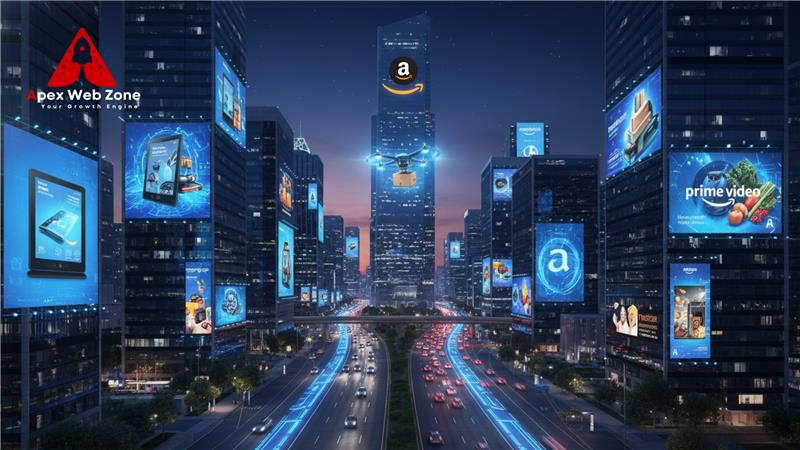
Amazon Ads Management has redefined digital visibility. Remember when top brands fought for prime billboard spots in Times Square? Fast-forward to 2025 that real estate now lives on Amazon’s search results page. Those sponsored listings and headline ads you scroll past? They’re the new-age billboards digital, data-driven, and ridiculously profitable when managed right.

The catch? Just like a highway ad doesn’t sell itself, Amazon Ads won’t either unless you know how to drive them. That’s where an innovative Digital Marketing Agency like ApexWebZone steps in, turning ad spend into brand domination.

Why Amazon Ads Management Is The New-Age Billboard Strategy

Think of Amazon as the modern shopping highway. Millions of shoppers fly through it every minute, ready to buy. And just like billboards along a busy expressway, Amazon Paid Advertising plants your product in front of those buyers at the perfect moment when intent is high, and patience is low.

The difference? Traditional billboards build awareness Amazon Ads drive conversions. Every impression has measurable intent, and every click has the potential to turn into revenue.

With the right Amazon Ads Management strategy, brands can :

  • Own top visibility on search pages.
  • Outrank competitors regardless of organic position.
  • Drive repeat purchases through retargeting.
  • Leverage AI-driven insights to scale profitably.

In other words, Amazon Ads aren’t a luxury anymore they’re a digital necessity.

How Amazon Ads Management Work (And Why Most Brands Get It Wrong)

Running Amazon Ads Management isn’t rocket science it’s worse. It’s algorithm science.
Amazon’s Ad ecosystem works on an auction model, where advertisers bid on keywords to appear in front of high-intent customers. But here’s the thing dumping money into Sponsored Products without understanding targeting, placement, and data signals is a fast track to burning your budget.

That’s why the smart move is hiring an experienced Digital Marketing Agency with proven PPC Management Services. At ApexWebZone, we don’t just “run ads.” We engineer them. From Custom Web Development that improves conversion landing pages to Amazon Ads Management that leverages behavioral analytics, every click is part of a system built to scale.

Turning Clicks Into Conversions With Smart Amazon Ads Management

Amazon’s A9 algorithm loves one thing relevance. To win in Amazon Ads, you don’t just outbid; you outsmart.

Here’s how a full-service agency like ApexWebZone does it :

  1. Deep Keyword Mapping :We identify high-performing product search terms, blending both branded and non-branded keywords for visibility across niches.
  2. Smart Budget Allocation :Every ad type (Sponsored Products, Brands, Display) serves a different purpose we balance awareness and conversion budgets like a portfolio.
  3. Creative Optimization : With our Branding and Design Agency expertise, visuals and copy are crafted to boost click-through rates and conversion intent.
  4. Landing Page Perfection :What good is traffic if it doesn’t convert? That’s where our Website Development Company skills come in optimizing product pages for speed, visuals, and conversion flow.
  5. Real-Time Analytics & Scaling : Our PPC team monitors metrics like ACOS, ROAS, and CTR to fine-tune every campaign in real time.

It’s a mix of data, creativity, and strategic execution something off-the-shelf ad tools just can’t replicate.

Cross-Platform Growth: Connecting Amazon Ads Management With Digital Marketing

Here’s the truth Amazon Ads don’t live in isolation. They work best when connected with your overall digital ecosystem.

An Ad strategy powered by ApexWebZone doesn’t stop at Amazon. We integrate campaigns across :

  • Instagram Advertising Services : To create buzz and social proof around your products.
  • Shopify SEO Services India : To enhance organic traffic for your brand website.
  • Shopify PPC Agency solutions : To bring the same ROI-driven approach to your eCommerce Site.
  • Bing Ads Specialist Campaigns : To capture buyers who don’t live in Google’s shadow.

It’s about omnichannel synergy connecting your customer’s journey from search to checkout.

Why Web Design & Branding Matter In Amazon Ads Management Success

Here’s the part most sellers overlook : you can’t run great ads without a great online foundation.
A poorly built website can destroy ad ROI faster than a bad keyword bid. Therefore, optimizing your website is critical before running paid campaigns. As a Web Design Agency and Website Development Company, ApexWebZone ensures your landing pages and brand sites are conversion-ready fast-loading, mobile-optimized, and psychologically tuned to sell.

Add Custom Web Development for analytics integration, and you’ve got a complete feedback loop one that turns ad data into actionable business growth insights.

Brand Building Beyond The Click

Amazon Ads drive sales. Moreover, the real gold lies in long-term brand recall.

Consumers might see your product once on Amazon, then again on Instagram, and even through Google Shopping. Each touchpoint builds familiarity. With the right Branding and Design Agency, you don’t just make sales you build trust.

And that’s what separates a brand that “sells on Amazon” from a brand that owns its category.

The ROI Reality Check

Let’s face it, Amazon Ads can be costly when you don’t understand how to use them. With precise targeting, bidding based on data, and cross-platform retargeting, companies always see ROI increase by 3-5x within a few months.

The Key? Working with experts who treat your budget like their own.

ApexWebZone’s PPC Management Services are laser-focused on scalability, not vanity metrics. Because impressions don’t pay bills conversions do.

Final Thoughts: Stop Watching. Start Driving.

Amazon Ads have become the billboards of the digital era. However, unlike static signs on a highway, these billboards actively react, learn, and sell.

If you’re still not taking advantage of Amazon Paid Advertising yet, you’re watching your competitors outnumber you on the world’s most crowded eCommerce highway. If you’re already promoting but you’re not seeing the results you’re in the right place to put aside the guesswork and begin thinking about strategies.

With ApexWebZone, you get more than campaign management you get a partner that understands the whole digital funnel. From Web Design to Amazon Ads Management, from Shopify SEO Services to Instagram Advertising, we connect every dot so your brand can own the entire digital landscape.

Because On Amazon, Visibility Isn’t Given It’s Driven. And ApexWebZone Knows How To Take The Wheel.

FAQ’s

Q1: Why are Amazon Ads being called the new digital billboards?

A: Because they give your brand top visibility right where customers are ready to buy Amazon’s search results. Unlike static billboards, Amazon Ads are interactive, measurable, and conversion-driven.

Q2: How does Amazon Ads Management improve brand performance?

A: With expert targeting, smart bidding, and creative optimization, Amazon Ads Management ensures your products reach high-intent buyers while minimizing wasted spend.

Q3: Can Amazon Ads replace traditional PPC campaigns?

A: Not entirely. Amazon Ads are part of a broader ecosystem. When paired with Google, Bing, and social PPC campaigns, they create a powerful omnichannel marketing strategy.

Q4: Why should I hire a Digital Marketing Agency for Amazon Ads?

A: Agencies like ApexWebZone bring data-driven insights, cross-platform expertise, and real-time campaign management turning ad budgets into measurable ROI.

Q5: How long does it take to see results from Amazon Paid Advertising?

A: Most brands start seeing noticeable traction within 4–6 weeks, with significant ROI improvements after 2–3 months of optimized campaign management.

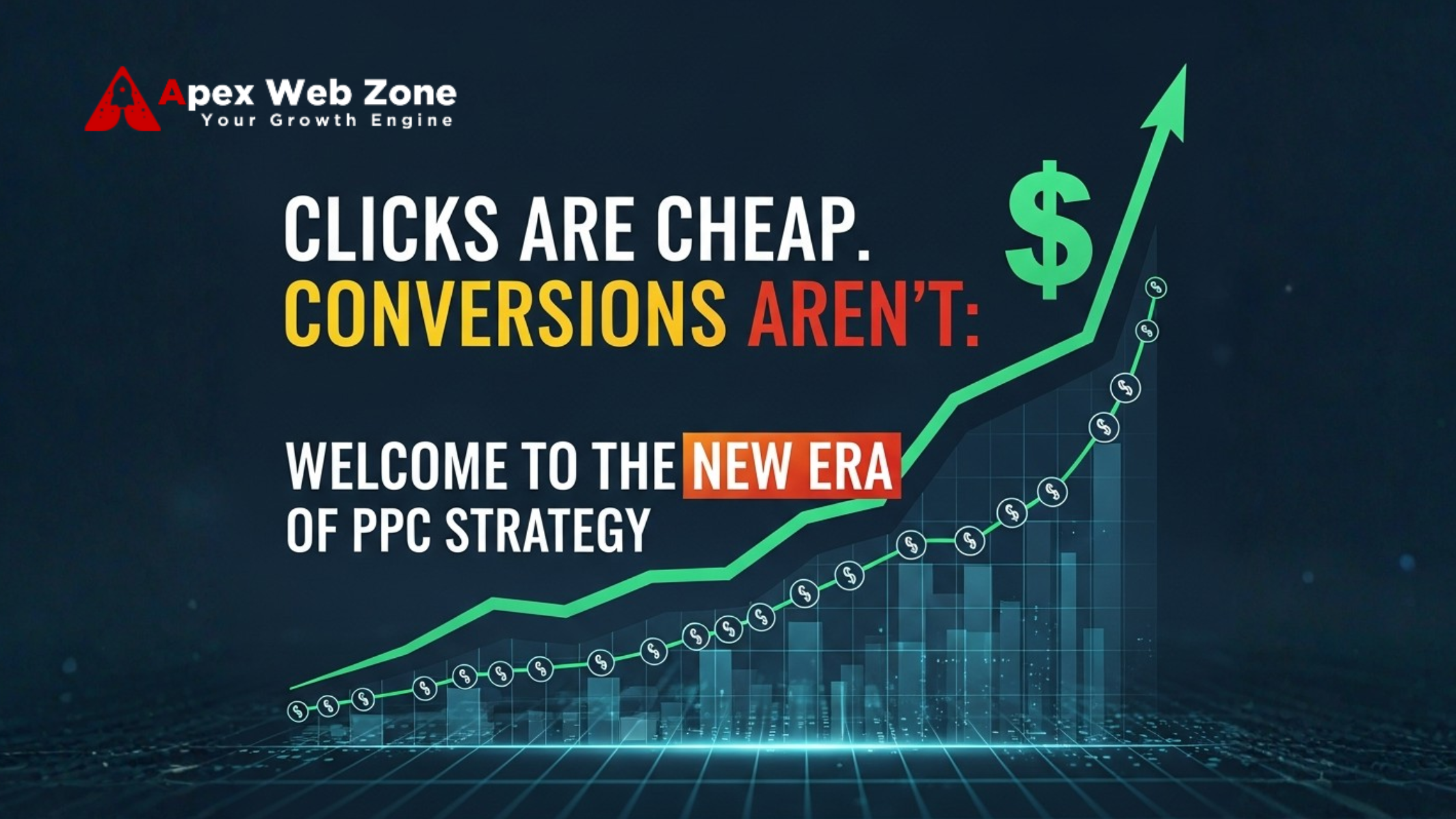
Modern PPC marketing graph showing rising conversions — “Clicks Are Cheap. Conversions Aren’t.” by Apex Web Zone, a leading Digital Marketing and PPC Management Agency.
Every marketer has bragged about “lowering CPC.” But here’s the truth : cheap clicks don’t mean much when your conversion rate looks like a ghost town. The era of “spray and pray” PPC is dead. Welcome to the new reality where data, intent, and precision win over volume, and agencies like Apex Web Zone are rewriting how brands run paid campaigns that actually convert.
Modern PPC marketing graph showing rising conversions — “Clicks Are Cheap. Conversions Aren’t.” by Apex Web Zone, a leading Digital Marketing and PPC Management Agency.
Apex Web Zone redefines PPC performance — transforming every click into measurable growth through smart, data-driven marketing strategies.

Cheap Clicks Are The New Vanity Metric

The PPC market is overflowing with companies chasing clicks that cost less as if they’re gold coins. However, in 2025 it’s a different game. Google’s algorithm no longer rewards guesswork, it gives preference to the context. A Web Design Agency or Digital Marketing Agency can get clicks all day long, but if the post-click experience (landing page, UX, or funnel) isn’t optimized, every rupee spent is just digital dust. At Apex Web Zone, we call it the “CPC illusion.” Clients celebrate low cost-per-click numbers without realizing they’re often paying for junk traffic people who never intended to buy, subscribe, or even engage. The focus shouldn’t be on cheaper traffic; it should be on qualified traffic.

The New PPC Mindset: Relevance > Reach

The contemporary PPC ecosystem thrives on its relevance. It’s Google, Bing, or Amazon Ads these platforms are now more efficient than ever in measuring intent. A winning PPC campaign in 2025 isn’t built on broad match chaos it’s engineered through custom data segmentation, conversion tracking, and funnel mapping that speaks to why the user clicked in the first place. That’s where Apex Web Zone’s PPC Management Services come in. Instead of chasing impressions, we build campaigns that :
  • Target buyer intent over search volume.
  • Blend keyword psychology with landing page flow.
  • Align ad spend with actual sales metrics.
It’s a holistic approach that turns every click into a potential conversation, not a dead-end visit.

The Design Conversion Connection

You can’t talk conversions without talking design. Period. A Website Development Company or Branding and Design Agency that doesn’t collaborate closely with PPC strategists is leaving money on the table. Your ad copy might be perfect, but if your landing page looks like it’s stuck in 2014 or loads slower than a government website, you’re doomed. That’s why at Apex Web Zone, PPC doesn’t live in a silo. Every campaign runs hand-in-hand with our Custom Web Development and Shopify SEO Services India teams to ensure :
  • Seamless landing page experience.
  • High Core Web Vitals scores.
  • Mobile-optimized conversion journeys.
  • Persuasive design psychology.
Because here’s the harsh truth: you can’t scale ads on a weak foundation. Conversion design is your silent salesperson and it never sleeps.

Amazon Ads: The New PPC Frontier

If Google Ads are the old warhorse, Amazon Paid Advertising is the new battlefield. But it’s not as simple as boosting bids on keywords like “best blender.” With Amazon’s evolving ecosystem, a smart Amazon Ads Management strategy requires:
  • SKU-level optimization.
  • A+ content integration.
  • Keyword relevance scoring.
  • ASIN defense tactics.
Apex Web Zone’s Amazon PPC specialists combine retail media analytics with real purchase behavior, making sure your products show up in front of users who are ready to buy not just browse.

Clicks Don’t Pay Your Bills. Conversions Do.

Beyond Google : Bing Ads And The Power Of Diversification Here’s something few agencies talk about: Bing Ads still convert often better than Google for certain niches. A Bing Ads Specialist understands that Microsoft’s audience skews slightly older, more affluent, and more deliberate. That means fewer window shoppers, more decision-makers. While competitors fight over Google CPCs, Apex Web Zone quietly leverages Bing’s ecosystem to deliver ROI that shocks clients used to paying double elsewhere. Because smart PPC isn’t about spending more. It’s about spending smarter. Social PPC: Where Emotion Meets Conversion The rise of Instagram Advertising Services is proof that performance marketing isn’t all numbers, it’s storytelling with precision targeting. On social platforms, users don’t search; they scroll. So the intent is lower, but the engagement potential is sky-high. That’s where Apex Web Zone’s creative and analytics teams collaborate to create scroll-stopping visuals, micro-copy that hits emotions, and retargeting loops that convert browsers into buyers. From Shopify PPC Agency setups to pixel tracking, we make sure every rupee spent earns its keep even in the algorithm’s chaos.

Metrics That Actually Matter

Forget CTR. Forget impressions. In this new PPC landscape, Apex Web Zone measures success through :
  • Cost Per Acquisition (CPA): Because clicks don’t feed you, customers do.
  • Lifetime Value (LTV) : Because a one-time sale isn’t real growth.
  • ROAS (Return On Ad Spend): Because efficiency beats vanity.
And when you blend PPC with strong UX from a Website Development Company, robust branding from a Branding and Design Agency, and data-driven insight, you don’t just grow traffic you grow businesses.

The Future Of PPC: Smart Spend, Not Big Spend

The future isn’t just about who is loudest, it’s about who’s listening the best. Automated tools, AI-driven bidding and intent-based algorithms have created PPC better-developed, but it is also less accommodating.  Without strategy, your ad budget becomes tech confetti. In Apex Web Zone, we blend human-machine accuracy. Every ad we promote each keywords we auction as well as every page that we design is supported by data as well as psychology and the ROI discipline. Since in the year 2025, marketing through digital will not be about spending money, it’s about maximizing the scale of your business.

Final Thoughts

Clicks are easy. Conversions are earned. So, if your current campaigns look great on paper but your revenue graph refuses to move, it’s time to re-think your PPC reality. Partner with Apex Web Zone, where PPC Management Services, Amazon Ads Management, and Custom Web Development come together to turn ad spend into actual sales. Because We Don’t Chase Clicks. We Build Conversions.

FAQ's

1. Why are cheap clicks not enough in PPC marketing?

Cheap clicks don’t guarantee conversions. In today’s PPC landscape, focusing only on lowering CPC often attracts irrelevant traffic. What truly matters is intent-based targeting and landing page optimization both of which convert traffic into paying customers.

2. How does Apex Web Zone improve PPC conversion rates?

At Apex Web Zone, we combine data-driven PPC management, custom web development, and UX design optimization to ensure every ad click leads to a seamless conversion experience. Our strategies target buyer intent, not just search volume turning ads into measurable ROI.

3. What makes a PPC campaign successful in 2025?

Success in modern PPC depends on relevance, precision targeting, and post-click experience. It’s about optimizing ad copies, keywords, and landing pages together. Agencies like Apex Web Zone integrate AI-driven bidding, funnel mapping, and behavior tracking to deliver consistent conversions.

4. Why should I invest in Amazon Ads Management along with Google Ads?

Amazon Paid Advertising targets users with high purchase intent often closer to making a buying decision than Google searchers. Apex Web Zone’s Amazon Ads Management service focuses on SKU-level optimization, A+ content, and keyword relevance to help brands maximize sales on Amazon.

5. Are Bing Ads still worth using for PPC campaigns?

Absolutely. Bing Ads often convert better in specific niches where the audience is more mature and affluent. As a Bing Ads Specialist, Apex Web Zone leverages this less competitive platform to deliver better ROI and lower acquisition costs compared to Google Ads.