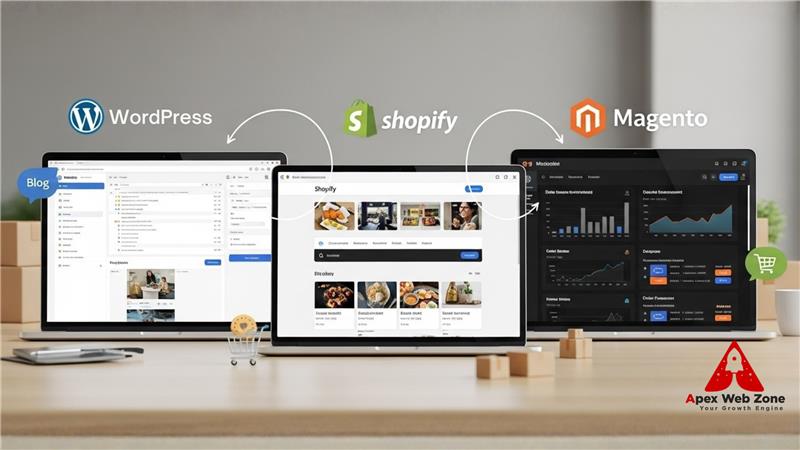
E-commerce in 2025 is no longer about just “having a store online.”
It’s about speed, flexibility, branding, control, and how well your platform grows with your business.
If you’re choosing between WordPress, Shopify, and Magento, you’re already on the right path. These three platforms dominate global e-commerce for a reason. But they serve very different types of businesses, budgets, and growth goals.
As a Website Development Company, we see one mistake again and again. Businesses choose a platform because it’s popular, not because it’s right for them. That decision usually comes back to bite them later, in costs, limitations, or painful migrations.
This guide breaks things down honestly. No hype. No platform bias. Just clarity.
Why Platform Choice Matters More In 2025
Online shoppers today are impatient and ruthless. If your site loads slowly, feels clunky, or looks generic, they leave. No second chances.
Search engines are also smarter. They reward structured data, clean code, mobile-first layouts, and meaningful user experience. Your e-commerce platform directly affects all of that.
More importantly, your platform decides how easily you can adapt. New payment methods, AI-driven recommendations, international selling, advanced SEO, and performance marketing all depend on the foundation you choose today.
This is where custom web development becomes a serious advantage, not a luxury.
WordPress (WooCommerce): Flexibility With Responsibility
WordPress, powered by WooCommerce, remains the most flexible option in 2025. It’s ideal for businesses that want control over design, content, and SEO.
From a branding perspective, WordPress gives you freedom. You’re not locked into predefined layouts or checkout flows. A skilled Web Design Agency can build a store that looks and feels completely unique.
However, freedom comes with responsibility.
You manage hosting, security, updates, and performance optimisation. This is not a downside if you have the right technical support. It becomes a nightmare if you don’t.
WordPress Works Best When :
- Content Marketing Is A Major Growth Channel.
- SEO Flexibility Matters Deeply.
- You Want Full Ownership Of Your Website And Data.
- Branding Needs To Stand Out, Not Blend In.
For many growing brands, WordPress offers the perfect balance between power and cost, especially when guided by an experienced Website Development Company.
Shopify: Speed, Simplicity, And Scale-ready Convenience
Shopify is still the fastest way to launch a professional e-commerce store in 2025. It’s stable, secure, and beginner-friendly.
The biggest advantage of Shopify is peace of mind. Hosting, security, backups, and performance are handled for you. You focus on products and marketing.
This is why Shopify remains popular among D2C brands and international sellers. It integrates easily with logistics, payment gateways, and marketing tools.
That said, Shopify has limitations.
Customization beyond a point requires workarounds. Advanced features often mean monthly app costs. And full control over checkout or backend logic is still restricted.
For brands targeting India specifically, Shopify SEO Services India play a critical role. Shopify is SEO-capable, but only when structured properly by professionals who understand local and global search behaviour.
Shopify is best when :
- You Want Fast Deployment.
- You Prefer Managed Infrastructure.
- Your Business Model Is Straightforward.
- You Plan To Scale Internationally Without Tech Headaches.
Magento (Adobe Commerce): Enterprise Power With Enterprise Responsibility
Magento is not for everyone, and that’s okay.
In 2025, Magento is firmly positioned for complex, large-scale e-commerce operations. Think multi-store setups, advanced inventory logic, custom pricing rules, and deep integrations with ERP or CRM systems.
Magento offers unmatched flexibility and scalability. But it demands expertise. Development costs are higher. Hosting is more complex. Maintenance requires serious planning.
This is where custom web development is not optional. It’s essential.
Magento Shines When :
- You Run A High-volume Or Enterprise-level Store.
- You Need Advanced Custom Workflows.
- Multiple Regions, Currencies, Or User Roles Are Involved.
- Performance And Scalability Are Mission-critical.
Magento is powerful, but only when built and maintained correctly.
When Each Platform Makes Sense
Choosing the right platform isn’t about trends. It’s about timing.
Early-stage businesses often do better with Shopify or WordPress. They move fast and test ideas quickly.
Growing brands usually gravitate toward WordPress for flexibility or Shopify for stability.
Large enterprises lean toward Magento when their operations outgrow simpler systems.
The smartest businesses think ahead. They choose a platform that fits today but won’t choke tomorrow.
This is where the guidance of a Branding and Design Agency combined with technical strategy becomes invaluable. Your platform should support your brand story, not restrict it.
SEO, Performance, And Long-Term Growth
From an SEO perspective, all three platforms can rank well. The difference lies in execution.
WordPress offers the deepest SEO control. Shopify requires structured optimisation. Magento demands technical precision.
In 2025, search visibility depends on site speed, mobile UX, schema, and content relevance. A well-built store on any platform will outperform a poorly built one on the “best” platform.
That’s why choosing the right Website Development Company matters more than choosing the platform itself.
Where Apex Web Zone Fits In
At Apex Web Zone, based in Ahmedabad and working globally, the focus is never on selling a platform. It’s on solving business problems.
Some clients need Shopify for speed. Others need WordPress for flexibility. A few need Magento for scale.
The goal is alignment. Platform, branding, performance, and future growth should work together, not fight each other.
That approach is what separates a typical vendor from a true Web Design Agency that understands business.
Final Thoughts
Choosing between WordPress, Shopify, and Magento in 2025 is not about features. It’s about fit.
The right platform supports your brand, your customers, and your long-term vision. The wrong one slows you down quietly until it becomes expensive to change.
A thoughtful decision today saves years of friction tomorrow.
If clarity, scalability, and brand alignment matter to you, working with an experienced Website Development Company like Apex Web Zone can make that decision far simpler and far smarter.
FAQ's
There is no universal “best.” WordPress suits flexibility, Shopify suits simplicity, and Magento suits scale. The right choice depends on your business size, budget, and growth plans.
Yes, Shopify is easier to manage for beginners. WordPress offers more control but requires technical involvement or professional support.
Magento makes sense for large or complex e-commerce operations with advanced requirements, multiple stores, or high transaction volumes.
Yes, with proper setup and expert guidance. This is where specialised Shopify SEO Services India can make a significant difference.
If your business is serious about growth, yes. Professional guidance helps avoid costly mistakes and future migrations.
